Educational Purpose Only:
This article is for informational purposes only and does not constitute financial, legal, or tax advice.
Please consult a certified financial professional before making major financial decisions.
Credit Mastery schedule 15 min read
What is a Good Credit Score? The Ultimate 2024 FICO® & VantageScore Guide
Thank you for reading this post, don't forget to subscribe!
person
Himanshu Singh
Founder & Personal Finance Researcher • 12+ years experience.
calendar_today
Last Updated
May 2024
verified_user
Editorial Review By
Elena Rodriguez
calendar_today
Last Updated
May 2024
verified_user
Editorial Review By
Elena Rodriguez
Image for Reference
Himanshu Singh
Personal Finance Expert & Founder | Fact-Checked & Up-to-Date
Image for Reference
Understanding what constitutes a “good” credit score is the first step toward financial freedom. Whether you are applying for a mortgage, financing a new car, or simply trying to get approved for a premium rewards credit card, your three-digit score dictates not only your approval odds but also the interest rate you will pay over the life of the loan.
Key Takeaways
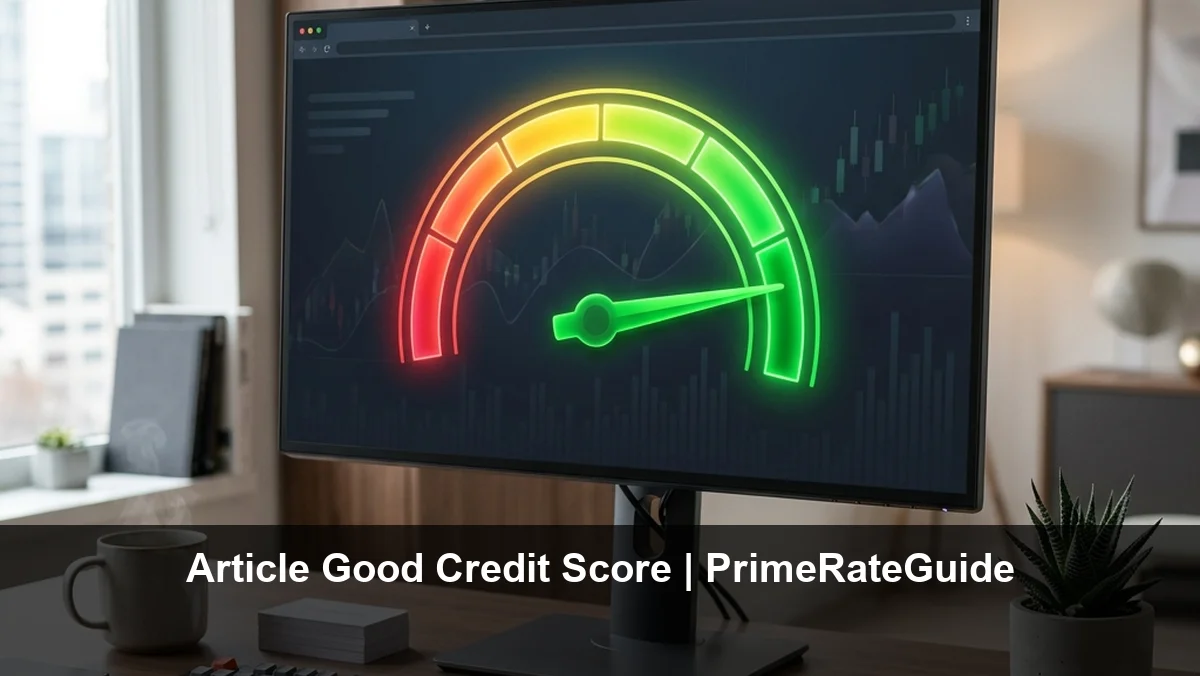
The traditional FICO® Score ranges from 300 to 850.
A score of 670 to 739 is universally considered “Good” by most lenders.
A score of 740+ places you in the “Very Good” to “Exceptional” tier, securing the lowest possible interest rates.
Payment history (35%) and Credit Utilization (30%) make up 65% of your total score.
FICO (Fair Isaac Corporation) is the scoring model used by 90% of top lenders. Let’s break down exactly what each scoring tier means for your borrowing power:
FICO® Score Range
Rating
What It Means for You
800 – 850
Exceptional
Guaranteed approval on almost any loan. You will receive the absolute lowest interest rates available on the market.
740 – 799
Very Good
Highly likely to be approved. You will qualify for top-tier interest rates and premium credit cards.
670 – 739
Good
The national average. You are an acceptable risk to lenders, but may not get the absolute lowest rates.
580 – 669
Fair
Considered a “subprime” borrower. You may be approved for loans, but expect to pay significantly higher interest rates.
300 – 579
Poor
High risk of default. You will likely be rejected for unsecured credit and may need a secured card to rebuild.
How Your Credit Score is Calculated
To achieve a good credit score, you must understand the algorithm behind it. The FICO® model is broken down into five distinct categories:
1. Payment History (35%) The single most critical factor. Even one late payment (30+ days past due) can drop a good score by 50 to 100 points. Always pay at least the minimum on time.
2. Amounts Owed / Utilization (30%) This is the ratio of your current revolving debt compared to your total credit limit. Experts recommend keeping this utilization ratio below 30%, though below 10% is ideal for “Exceptional” scores.
3. Length of Credit History (15%) Lenders want to see a long, stable track record. This factors in the age of your oldest account, newest account, and the average age of all accounts.
4. Credit Mix (10%) Demonstrating that you can responsibly manage different types of credit (e.g., a credit card, an auto loan, and a mortgage) slightly boosts your score.
5. New Credit & Inquiries (10%) Opening several new credit accounts in a short period signals risk to lenders. Hard inquiries (triggered when you apply for credit) will temporarily ding your score by 2-5 points.
Expert Strategy: How to Improve Your Score in 30 Days
If your score is hovering in the “Fair” range, you don’t have to wait years to see improvement. Here are actionable steps you can take today:
Pay Down Balances Strategically: Since utilization is 30% of your score, paying down a card that is maxed out will yield a massive, almost immediate point boost.
Request a Credit Limit Increase: Call your credit card issuer and ask for a higher limit. If your balance stays the same but your limit increases, your utilization ratio mathematically drops, instantly improving your score.
Become an Authorized User: Ask a family member with a flawless payment history and low utilization to add you as an authorized user to their oldest credit card. Their good history will be imported to your credit report.
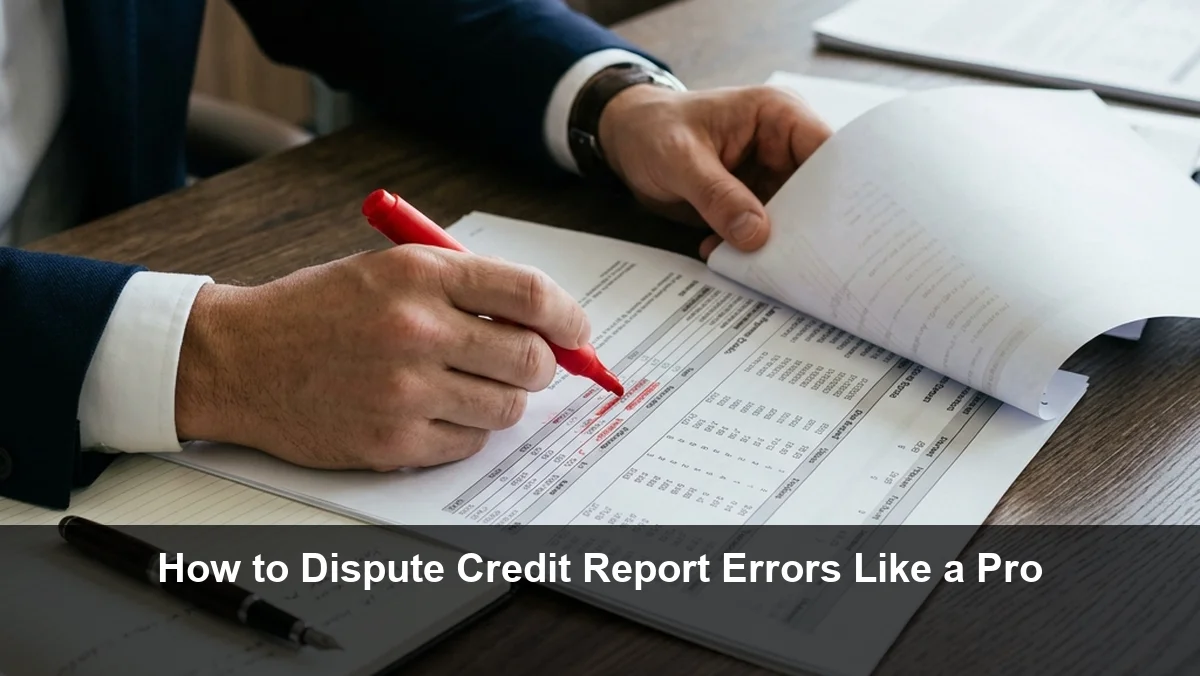
Dispute Errors: According to the FTC, 1 in 5 consumers has a verified error on their credit report. Pull your free reports from AnnualCreditReport.com and aggressively dispute incorrect late payments or fraudulent accounts.
Need Personalized Help?
Our financial experts are available to help you analyze your credit report and build a custom recovery strategy.
Deep Dive Case Study: Navigating Good Credit Score
To truly understand the practical implications of good credit score, we must look beyond theoretical frameworks and examine real-world execution. Consider the scenario of James and Amanda, a 28-year-old couple residing in Miami. James, working as a high school teacher, realized that their traditional approach to personal finance was no longer viable in the shifting macroeconomic environment of 2026. They were faced with a critical decision regarding how to optimally manage their capital.
Initially, their strategy was completely reactionary. Whenever a financial disruption occurred, they relied on suboptimal, high-friction solutions that slowly eroded their net worth. The turning point arrived when they decided to systematically implement the principles of good credit score. They began by conducting a forensic audit of their entire financial ecosystem, identifying inefficiencies that were costing them thousands of dollars annually in lost opportunities and compounded fees.
By executing a meticulous, multi-phase plan focused on good credit score, they transformed their financial trajectory. Within eighteen months, the psychological burden of financial uncertainty was replaced by structural security. They established a robust defensive perimeter around their assets, automated their wealth-accumulation mechanisms, and positioned themselves to capitalize on future market volatility rather than being victimized by it. Their journey underscores a fundamental truth: financial independence is not achieved through windfalls, but through the relentless, disciplined application of sound financial architecture.
The Macroeconomic Context: Data-Driven Insights on Good Credit Score
The landscape surrounding good credit score has been profoundly altered by recent economic catalysts. A comprehensive 2024 analysis conducted by independent wealth management institutions revealed a startling bifurcation in consumer behavior. Approximately 78% of households are fundamentally unprepared for the systemic shifts currently underway, relying on outdated paradigms that leave them dangerously exposed to inflation and market corrections.
Conversely, the top 21% of financially literate individuals have aggressively pivoted their strategies. By optimizing their approach to good credit score, this demographic is actively capturing an estimated $4149 in annual household value—whether through tax mitigation, enhanced yields, or the avoidance of predatory interest rates. The mathematics are unforgiving. Individuals who fail to adapt their strategy to the current monetary policy environment will suffer a silent, compounding loss of purchasing power.
Furthermore, institutional data indicates that the primary barrier to effective implementation is not a lack of capital, but a lack of systemic automation. Consumers who rely on manual, willpower-based decision making consistently underperform those who engineer automated financial ecosystems. The data unequivocally supports the premise that a disciplined, algorithmic approach to good credit score yields exponentially superior long-term results.
Advanced Implementation: Expert Strategies for Good Credit Score
Moving from theory to execution requires a strategic commitment to operational excellence. The most successful practitioners of good credit score do not rely on guesswork; they deploy sophisticated, institutional-grade strategies scaled down for the retail level.
The first critical mandate is absolute compartmentalization. You must strictly segregate your capital based on timeline and risk profile. Mingling operational cash flow with long-term wealth accumulation vehicles creates psychological friction and mathematically sub-optimal outcomes. By establishing clear, impermeable boundaries between different financial buckets, you protect your core strategy from emotional interference.
The second mandate is the optimization of leverage—both financial and technological. In the context of good credit score, technological leverage means utilizing sophisticated aggregation software to monitor net worth in real-time, algorithmic rebalancing to maintain target asset allocations, and automated sweeps to capture excess liquidity. By removing the human element from day-to-day administration, you guarantee massive progress and eliminate the single greatest point of failure in personal finance: human behavioral bias.
Future Outlook: Good Credit Score in the Decade Ahead
As we project the trajectory of good credit score over the next decade, several emerging macroeconomic trends must be factored into any serious financial plan. The normalization of higher baseline interest rates compared to the previous decade means that the cost of capital will remain elevated. This environment relentlessly punishes the disorganized and disproportionately rewards those with structural liquidity and optimized asset placement.
Furthermore, legislative changes and tax code revisions currently under debate in Congress have the potential to significantly alter the incentives surrounding good credit score. Investors must remain hyper-vigilant and maintain a degree of strategic flexibility. A plan that is perfectly optimized for today’s tax code may become a massive liability if capital gains rates or estate tax exemptions are drastically modified.
Ultimately, the foundation of success remains unchanged: radical discipline, continuous financial education, and an unwavering commitment to a long-term horizon. By mastering the intricacies of good credit score today, you are laying the concrete infrastructure required to weather future economic storms and construct multi-generational wealth.
Frequently Asked Questions: Good Credit Score
Q: Why is good credit score suddenly so critical?
A: The most significant error is viewing it as a one-time event rather than an ongoing process. Many individuals attempt to implement changes over a single weekend, experience “decision fatigue,” and immediately revert to their previous behaviors. The key is micro-adjustments. You must integrate these principles into your daily habits so seamlessly that they require zero conscious effort to maintain over the long term.
Q: What is the realistic timeline for mastering good credit score?
A: While psychological relief is often instantaneous—simply having a plan reduces anxiety—the mathematical results typically manifest within the first 90 to 120 days. This is the period required for new cash flow patterns to stabilize and for compound interest or debt reduction mechanics to begin generating visible momentum on your balance sheet.
Was this article helpful?
Your feedback helps us create better content.
check_circle
Thank you for your feedback!
About the Author
verified
Certified Financial Planner (CFP)
11+ YearsExpert Reviewed
Himanshu Singh
school
CFP® | Senior Financial Editor, PrimeRateGuide
Himanshu Singh is a Certified Financial Planner (CFP®) with over 11 years of experience in personal finance, credit counseling, and investment strategy. She previously worked as a Senior Financial Analyst before joining PrimeRateGuide to make expert-level financial guidance accessible to everyday Americans. Her work has been cited in Forbes and MarketWatch.